If you’re a paving contractor looking to grow your business, relying on word-of-mouth is no longer enough.
“Just do good work and the jobs will come.”
That’s the lie that keeps small companies stuck.
In 2026, residential and commercial clients aren’t waiting around for someone to recommend you. They’re Googling. They’re scrolling on Facebook.
And if you’re not showing up — you’re invisible.
Why Referrals Are Not a Growth Strategy
Let’s be clear: referrals are great. But they’re not predictable.
Here’s what happens when referrals are your only lead source:
-
Unpredictable work pipeline
-
Zero control over job quality or location
-
No ability to scale or hire with confidence
-
Lost jobs to competitors with a stronger online presence
If you want to get more commercial paving jobs, you need a predictable, scalable lead generation system.
And personally, having grown up in a family-owned paving company, I’ve seen this problem from the inside:
A lot of hard work, but not a profitable, long-lasting business.
Step 1: Show Up Where Commercial Paving and Residential Paving Clients Are Looking
✅ Build Local Online Presence
Property managers and businesses don’t find contractors by asking neighbors anymore — they search Google and check social media.
If you don’t have:
-
A Google Business profile
-
Reviews with photos
-
A simple landing page or website
…you’re already behind.
Step 2: Stop Renting Leads — Start Owning Them
Most paving contractors waste money on platforms like Angi, Thumbtack, or HomeAdvisor — and here’s why:
Those are shared leads.
You’re competing with 4, 5, or even 10 other contractors for the same job.
And the worst part?
You don’t own the customer data.
You can’t follow up properly.
You’re building their business — not yours.
✅ What You Need Are First-Party Leads
First-party leads mean:
-
The lead came directly to you, not through a middleman
-
You capture their name, phone, email, and intent
-
You can follow up automatically and build a real pipeline
-
You’re not in a bidding war every time
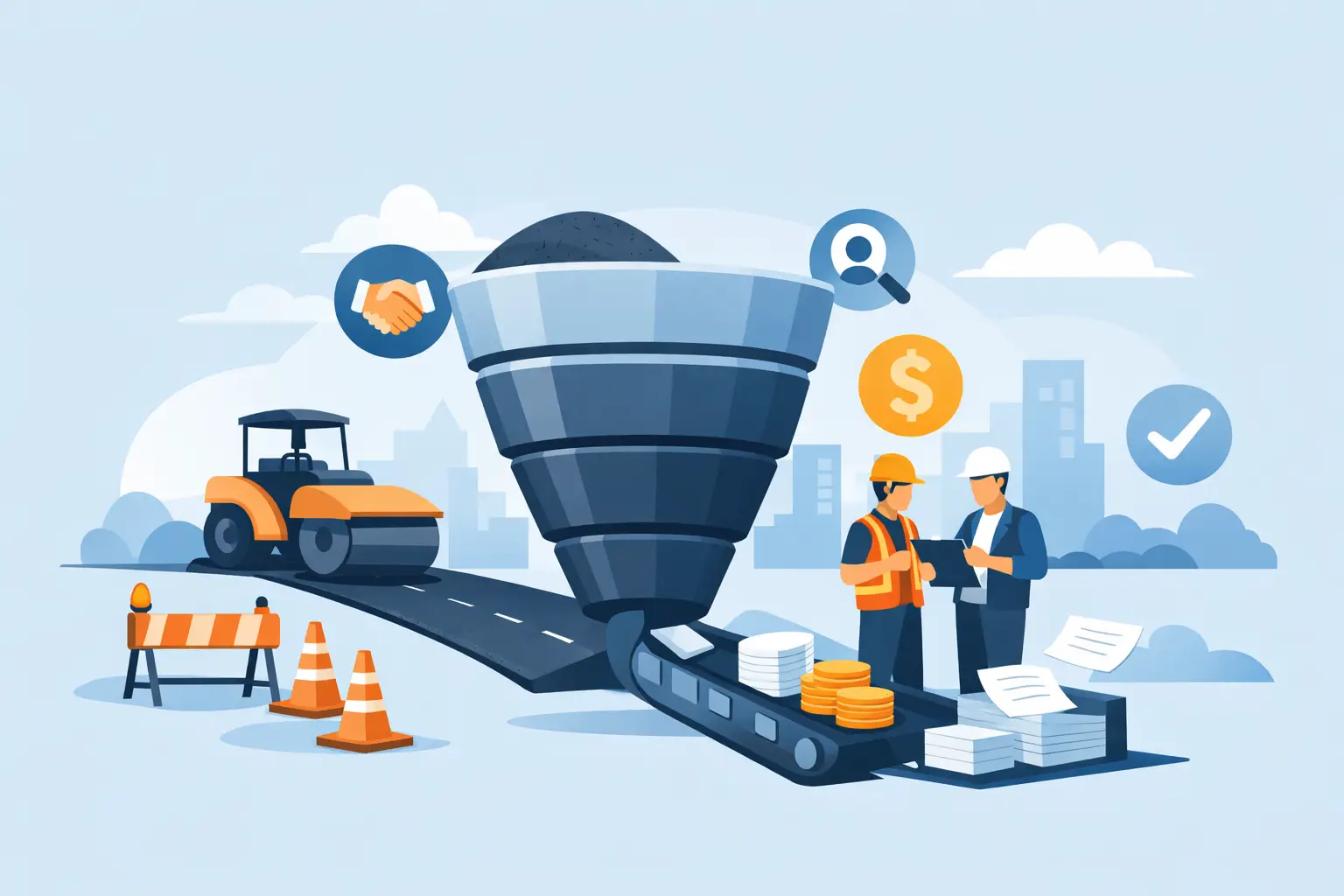
Step 3: Create a full lead-to-job ecosystem (from ads to signed contracts)
A lead is not a job.
Traffic is not revenue.
Systems are what turn interest into signed work.
The ecosystem works like this:
First, you generate demand using paid channels.
That can be Google Ads, Facebook Ads, Instagram Ads, Bing Ads — or any platform that fits your market.
The platform doesn’t matter as much as the structure.
Ads exist for one reason only:
to generate first-party leads you own, not referrals you wait for.
Once leads come in, the process must move immediately.
Step 1: Call and qualify the lead
Not every lead is a good fit.
The goal of the call is simple:
-
Confirm the project type
-
Confirm location and scope
-
Decide if it’s worth a site visit
Bad leads are filtered out early.
Good leads move forward fast.
Step 2: Schedule the site visit
Qualified leads are booked directly into the calendar.
No back-and-forth. No chasing.
The site visit is where intent becomes real.
Step 3: Build the estimate
After the site visit, the estimate is created quickly — while the project is still top of mind.
Speed here matters more than perfection.
Step 4: Present the estimate
Estimates are not just sent.
They are presented — explaining scope, timeline, and expectations.
This is where trust is built.
Step 5: Close the sale
Questions are answered. Objections are handled.
The decision gets made.
Step 6: Sign the contract and start the job
Contract signed.
Deposit collected.
New work in the pipeline.
This is the full loop:
Ads → Leads → Calls → Site Visits → Estimates → Closed Deals → Jobs
When this ecosystem is in place, growth stops being random.
You don’t “hope” work comes in — you manufacture demand and control the flow.
That’s the difference between contractors who stay busy
and contractors who scale.
Step 4: The Sales Are In The Follow Up
Here’s the killer stat most contractors ignore:
60% of leads go cold due to slow or no follow-up.
That means:
-
Missed calls = lost jobs
-
No-shows on estimates
-
Dead leads that could’ve closed with a single text
Top contractors use tools that:
-
Auto-text new leads instantly
-
Book calls and estimates automatically
-
Keep following up — even when they’re on the job site
Looking to learn more about how to create your client adquisition system?
Schedule a free call to see if we can help you build a strategy to acquire bigger commercial paving jobs here: