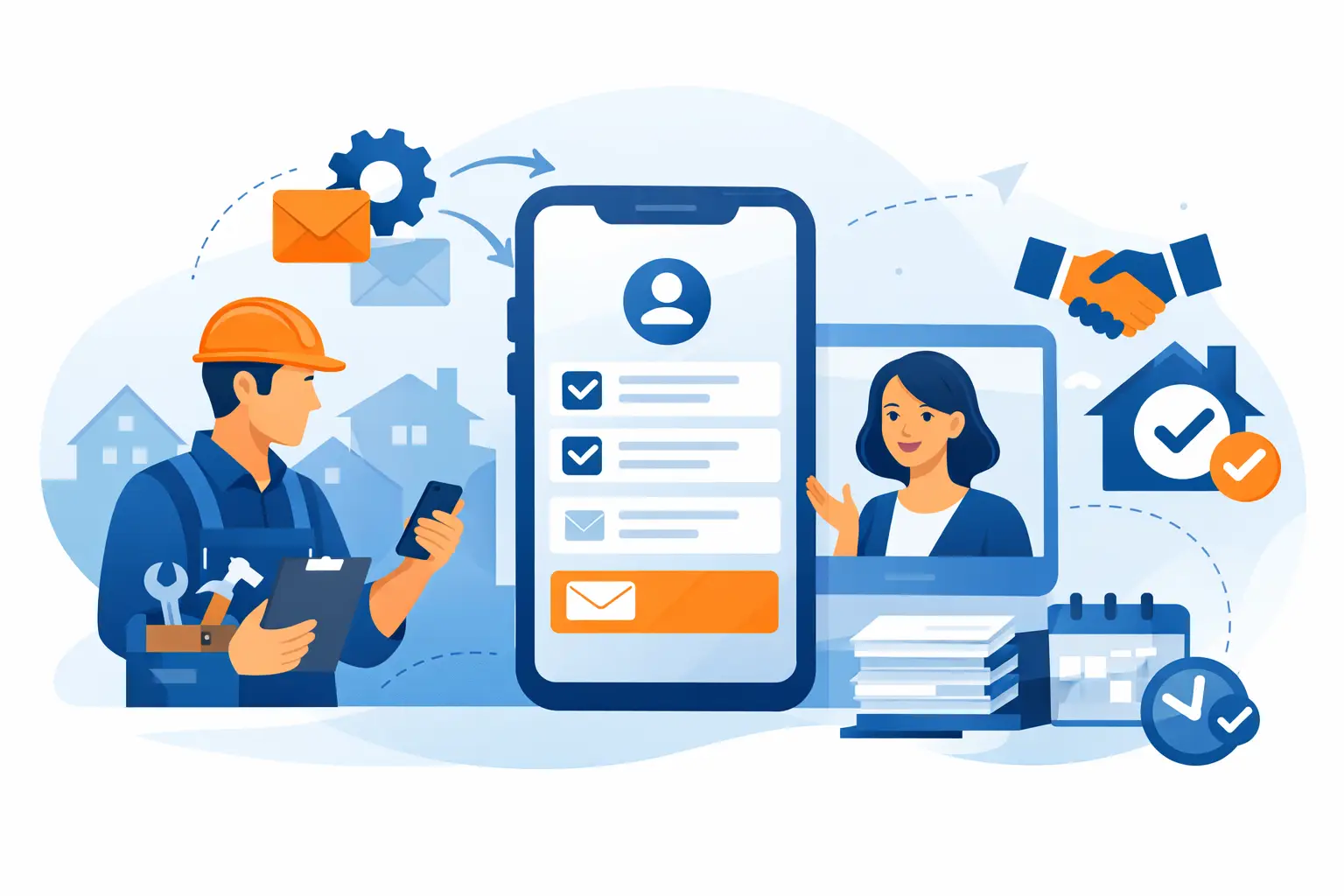
A property manager asks for a quote on Tuesday. You send it by Wednesday. By Friday, three jobs, two fire drills, and one crew issue later, that lead is cold. Not because your price was bad. Not because they did not need the work. Because nobody followed up fast enough. That is exactly why automated follow up for contractors is not a nice extra anymore. It is a sales control system.
Most paving contractors do not lose commercial work because they cannot do the job. They lose it because the sales process is loose, inconsistent, and dependent on whoever remembered to call back. In this market, that is a bad bet. If you are trying to keep crews loaded, protect margins, and stop relying on referrals, your follow-up cannot live in someone’s memory.
Why automated follow up for contractors matters so much
Commercial buyers do not make decisions on your timeline. Property managers, HOAs, facility directors, and asset managers are juggling vendors, budgets, complaints, inspections, and internal approvals. Even when they are interested, they often need multiple touchpoints before they respond, schedule, or sign.
That creates a problem for contractors. You are running jobs, handling labor, moving equipment, dealing with weather, and quoting new work at the same time. Manual follow-up sounds simple until the phones start ringing and the schedule gets tight. Then the same thing happens again: good leads sit too long, bids go stale, and your team starts blaming price when the real issue was process.
Automated follow-up fixes the gap between interest and action. It keeps leads moving while your team is working. It responds fast, stays consistent, and makes sure prospects hear from you more than once without your estimator having to babysit every opportunity.
That does not mean replacing human sales. It means protecting it. The automation handles speed, repetition, reminders, and basic nurturing so your people can step in at the right moment to close.
What automated follow-up should actually do
A lot of contractors hear “automation” and picture spammy texts or generic email blasts that get ignored. That is not the goal. Good automated follow up for contractors should feel like a system built around the way commercial jobs are actually sold.
It should answer the lead immediately, confirm next steps, and reduce the lag between inquiry and contact. If someone requests a quote after hours, they should not wait until the next afternoon to hear back. They should get a prompt response that tells them they are in motion.
After that, the system should keep the conversation alive. If a prospect has not scheduled a site visit, automation can remind them. If a quote has been sent, automation can check in, ask if they have questions, and prompt a reply. If they go quiet, the system should re-engage them before the opportunity disappears.
The key is timing and relevance. A lead who just came in needs speed. A lead who received a proposal needs confidence and clarity. A lead who has gone dark may need a simple nudge or a reason to re-open the conversation.
Where contractors usually break the sales process
The biggest breakdown is not lead generation. It is the handoff after the lead comes in.
A campaign works, the phone rings, a form gets filled out, and then everything depends on a busy human. If the office is overloaded or the estimator is in the field, response time slips. If the quote goes out but nobody follows up for a week, momentum dies. If there is no system for reminders, old opportunities vanish into the cracks.
This is where most sales pipelines leak. Not at the top. In the middle.
Contractors also make the mistake of treating every lead the same. A commercial lead asking for a parking lot resurfacing quote is not the same as a residential caller looking for patchwork. A property manager evaluating multiple vendors needs a different sequence than someone ready to book striping next week. Automation works best when it reflects those differences instead of forcing every prospect through the same generic path.
The right follow-up sequence for commercial contractors
If you want better close rates, the sequence needs to match the buying cycle.
A new lead should get an immediate confirmation by text or email, ideally both, with a clear next step. That alone increases contact rates because it removes uncertainty. Then your team should get notified so a live call or personal message can follow quickly.
Once contact is made, reminders should support the sales process instead of replacing it. Site visit confirmations reduce no-shows. Estimate follow-ups keep proposals from sitting untouched. Check-ins a few days later can surface objections while the job is still active.
Longer-cycle commercial opportunities need a slower but steady cadence. Not daily nagging. Just smart, spaced communication that keeps your company in front of the buyer while they work through approvals. Done right, this is not annoying. It is professional. Buyers expect vendors to follow up. They just expect it to be organized.
What to automate and what not to automate
This is where contractors either get real leverage or create a mess.
You should automate speed-to-lead, appointment confirmations, estimate reminders, no-response check-ins, and reactivation messages for older opportunities. These are repetitive, time-sensitive actions that do not need custom thinking every single time.
You should not automate anything that requires judgment, negotiation, or trust-building at a high level. Pricing conversations, scope changes, objection handling, and deal-closing calls still need a real person. The same goes for complex commercial bids where relationships and timing matter.
In other words, automate the admin and the consistency. Keep the salesmanship human.
That balance matters. Too little automation and you bleed opportunities. Too much automation and you sound like a bot chasing a contract. The win is in using automation to create faster response times and tighter follow-through without losing the personal contact that closes serious jobs.
Automated follow up for contractors works best with qualification
Not every lead deserves the same amount of attention. If your system pushes low-quality leads into the same pipeline as serious commercial buyers, your team wastes time and the follow-up gets noisy.
That is why qualification matters. Before the heavy follow-up starts, you want to know what kind of project this is, what service they need, where the property is, and whether it fits your ideal work. A qualified commercial lead should get a stronger and more persistent sequence because the revenue potential is there.
This is one reason specialized systems outperform generic ones. A paving contractor selling asphalt, sealcoating, striping, concrete, or ADA work has a very different sales motion than a general home service company. The buyers are different. The job sizes are different. The timeline is different. Your automation should reflect that.
What this changes in the real world
When follow-up is automated the right way, your sales pipeline stops depending on perfect memory. Leads get touched fast. Quotes do not disappear. Old opportunities get revived. Your office is less chaotic because the system handles the repetitive pressure.
That creates downstream operational benefits too. More conversations turn into site visits. More site visits turn into proposals. More proposals stay active long enough to close. Over time, that gives you something most contractors never really build – predictability.
Predictability matters because it affects everything else. Crew scheduling gets easier. Revenue planning gets less shaky. You are not discounting just to fill holes in the calendar. You can be more selective because your pipeline is not running on luck.
And no, automation does not magically fix a bad offer, weak pricing strategy, or poor sales rep. It depends on the quality of the lead, the speed of your process, and how well your team handles the opportunities that rise to the top. But if your current issue is inconsistency, automation solves a very expensive problem.
The contractors who benefit most
This works best for contractors who already have capacity and want more control over booked work. If you have crews, equipment, and the ability to take on commercial jobs but your lead flow and follow-up are inconsistent, automation has a direct payoff.
It is especially valuable for companies stuck in the referral trap. Referrals come in waves. Commercial lead generation creates demand, but only if the back end is built to convert that demand. Otherwise you just create more ignored opportunities.
That is why the strongest growth systems combine lead generation, qualification, calendar booking, and automated follow-up in one process. One without the others leaves money on the table. Companies like PaveLeads focus on that full system because getting the lead is only half the job. The rest is conversion.
If your estimator is still chasing callbacks between job site issues, your sales process is too fragile. If leads sit untouched overnight, it is too slow. If bids go out and nobody knows what happened next, it is too loose.
Automated follow up for contractors fixes those weak points fast. It gives your business a repeatable way to stay in front of serious buyers without adding more manual chaos. And when the market gets tighter, the contractors with tighter systems usually win.