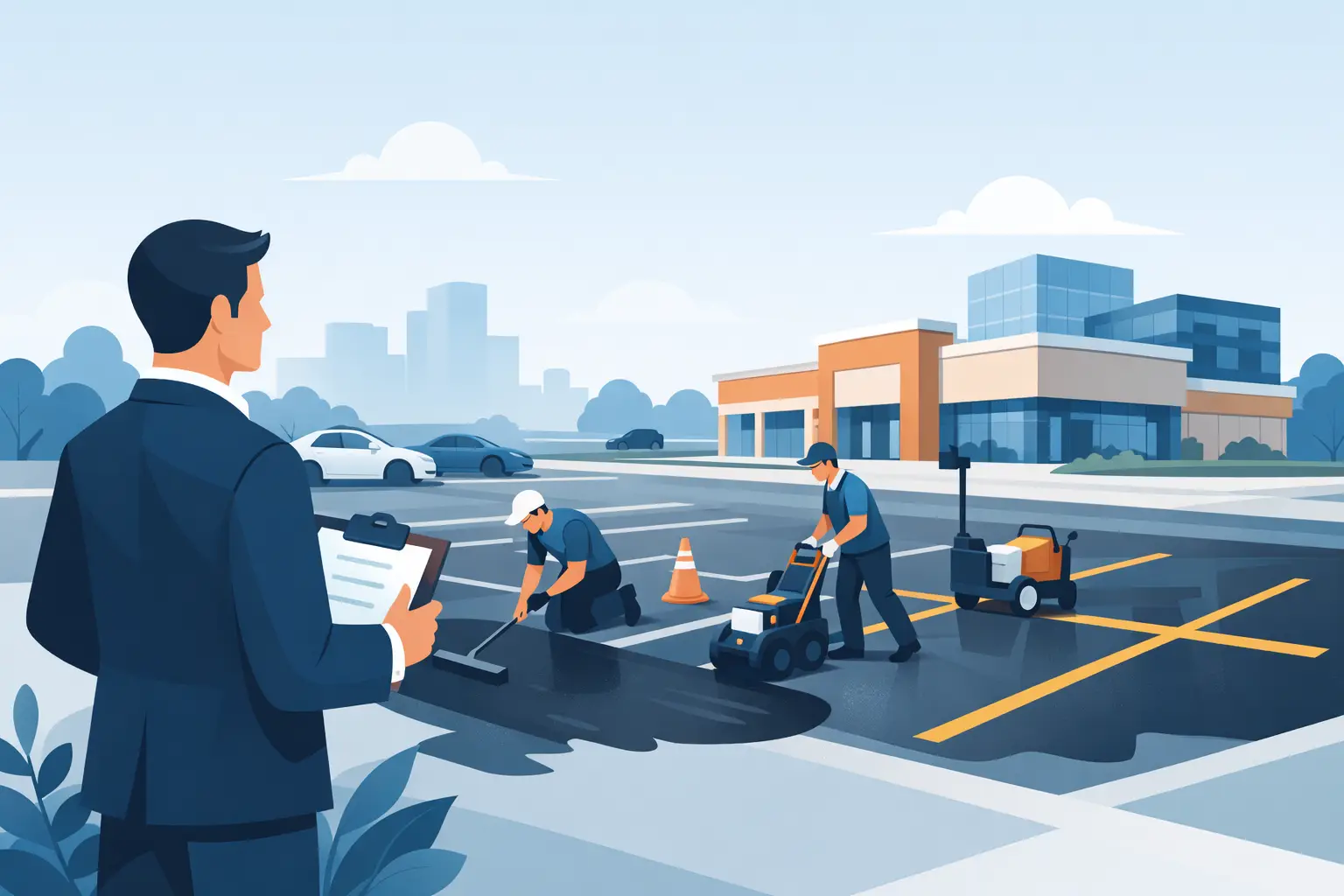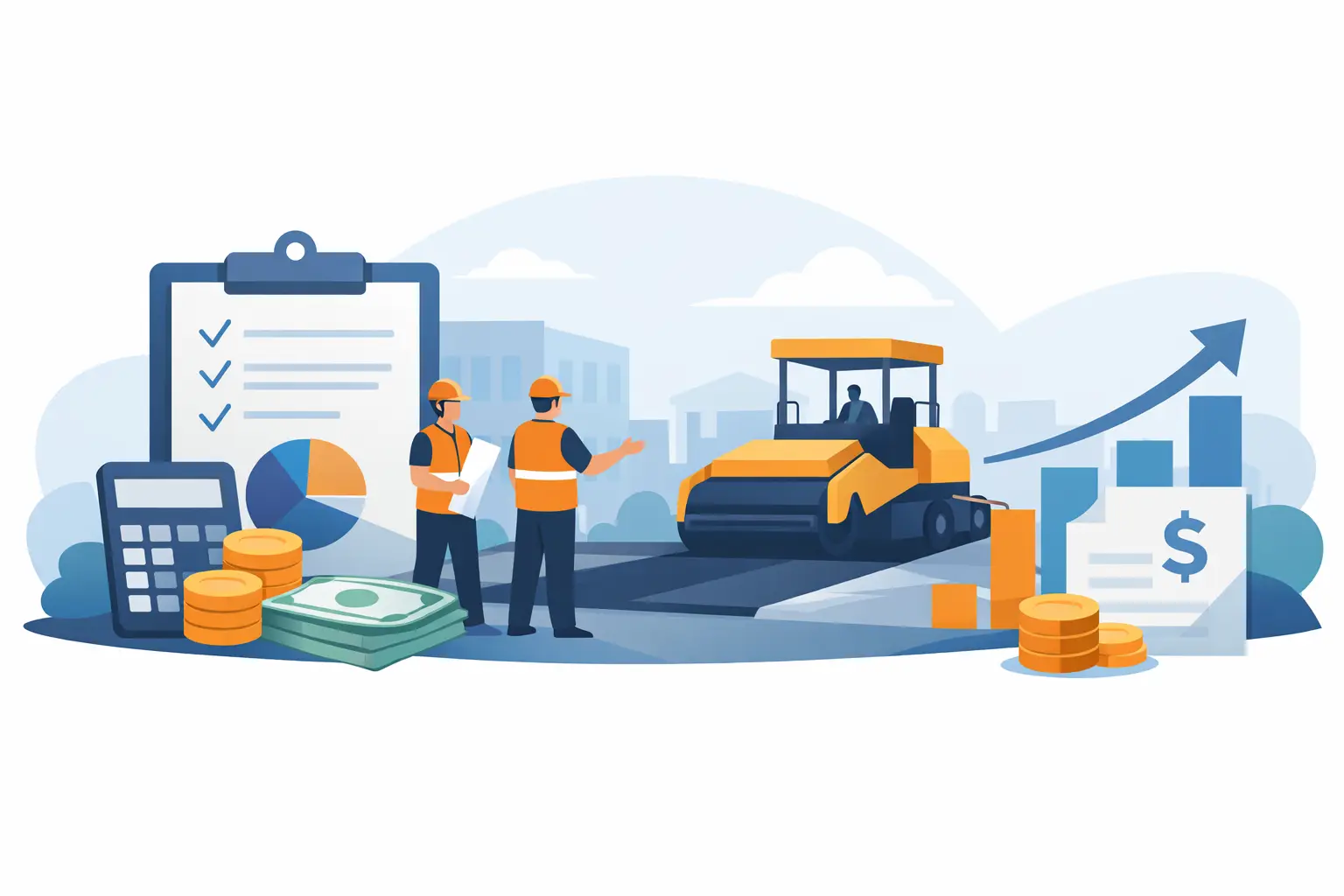
If your crews are ready, your equipment is sitting, and the phone still depends on referrals, you do not have a marketing problem. You have a pipeline problem. That is the real answer to cómo conseguir clientes comerciales pavimentación. Commercial work does not come from hoping a property manager remembers your name when the parking lot starts failing. It comes from building a system that puts you in front of buyers before they ask for bids.
Most paving contractors stay stuck because they treat commercial sales like residential word-of-mouth. That approach breaks fast. Commercial buyers move slower, compare more vendors, and expect professionalism at every step. If your lead flow is inconsistent, your follow-up is manual, and your sales process depends on whoever has time to call back, you will keep losing jobs to contractors with a better system, not necessarily better crews.
Cómo conseguir clientes comerciales pavimentación sin depender de referidos
Let’s be direct. Referrals are great, but they are not a growth strategy. They are a bonus. If you want predictable commercial jobs, you need three things working together: targeted lead generation, lead qualification, and relentless follow-up.
Miss one of those pieces and the whole machine weakens. You can run ads and still get junk leads. You can get solid leads and still lose them if nobody follows up fast. You can talk to buyers and still lose margin if your process makes you look disorganized. Commercial clients notice everything.
That is why the contractors winning better accounts are not just marketing harder. They are controlling the full path from first click to booked estimate.
The commercial paving buyer is not shopping the way you think
A property manager, facilities director, HOA board member, or commercial owner is not usually looking for the cheapest square-foot price first. They want risk reduction. They want a contractor who shows up, communicates clearly, understands phasing, handles striping or ADA details, and does not create headaches for tenants or ownership.
That matters because your marketing has to sell more than paving. It has to sell certainty.
If your website, ads, forms, and follow-up only say “we do asphalt” or “free estimates,” you sound exactly like everyone else. That is a race to the bottom. Commercial buyers need a reason to believe your company can handle scope, scheduling, compliance concerns, and communication without babysitting.
Build a system, not a pile of tactics
Contractors waste money when they buy random marketing services with no connection between them. One company runs ads. Another does SEO. Somebody else sets up a CRM nobody uses. Nothing talks to each other. Leads leak out. Estimates stall. Jobs go cold.
A commercial acquisition system needs to work as one unit.
You need targeted traffic from the right audience. That means property managers, multi-site owners, HOAs, retail center operators, industrial facilities, and anyone responsible for pavement budgets. Then you need a conversion path that makes it easy to request an estimate, answer basic qualification questions, and get routed into a follow-up sequence immediately.
Speed matters here. If a commercial lead comes in and waits half a day for a response, your close rate drops. Not always because they hired someone else that minute, but because your company already feels less dialed in. Buyers assume your operations match your response time.
What qualified commercial leads actually look like
Not every form fill is worth your estimator’s time. A real commercial lead should tell you something useful before your team even picks up the phone.
At minimum, you want to know the property type, service needed, location, project size or urgency, and whether the lead is the decision-maker or part of the approval chain. That one change alone helps protect your sales team from wasting time on tiny jobs, bad-fit accounts, or people who cannot approve anything.
This is where a lot of contractors get burned. They think they need more leads. Usually they need fewer, better leads and a process that filters out noise.
Cómo conseguir clientes comerciales pavimentación with better targeting
Broad marketing creates broad waste. If you want commercial paving jobs, your targeting needs to reflect the actual buyers.
That means messaging built around commercial pain points: liability, trip hazards, deferred maintenance, tenant complaints, appearance, drainage issues, striping visibility, ADA compliance, and budget planning. Residential-style messaging does not land with this audience.
The same goes for geography and service mix. A contractor focused on sealcoating and striping for retail centers should not market the same way as a company chasing full-depth asphalt replacement for industrial sites. The market is not one big bucket. The offer, ad angle, and sales process should match the type of work you want more of.
This is one of the biggest trade-offs in growth. If you market too broadly, you attract everything and close less. If you narrow your focus, lead volume may look smaller on paper, but close rate and job quality usually improve.
Follow-up is where most paving contractors lose the deal
Here is the ugly truth. Plenty of contractors do enough marketing to generate interest. Then they fumble the handoff.
A commercial lead comes in. Nobody calls fast enough. The voicemail is vague. The email gets sent two days later. The estimate follow-up depends on memory. Then the contractor says the lead was bad.
No. The process was bad.
Commercial sales require consistency. Immediate confirmation. Fast outreach. Multiple touchpoints. Clear next steps. Organized estimate scheduling. If your team is juggling all of that through texts, sticky notes, and missed calls, you are leaving money on the table every week.
This is why automation matters. Not because automation replaces sales, but because it protects sales. It makes sure leads are acknowledged instantly, reminded to book, and followed up without your office turning into chaos.
When done right, automation creates the impression every commercial buyer wants: this company is on it.
Your estimator should be closing, not chasing
A lot of paving businesses quietly bury their estimators in admin work. They are answering cold inquiries, tracking callbacks manually, rescheduling site visits, and trying to remember who has not responded.
That is expensive. Your estimator should spend time on qualified opportunities, not cleaning up a broken lead process.
A better system pre-qualifies leads, routes them correctly, automates reminders, and keeps the pipeline visible in one place. That changes the entire business. You stop operating like every incoming call is an emergency. You start managing opportunities with control.
That is also how you protect margin. Contractors who are disorganized tend to bid defensively. They lower price because they do not trust their pipeline. Contractors with a steady flow of qualified commercial opportunities bid from a stronger position.
What to fix first if you want more commercial jobs
If you are serious about growth, start by looking at the weak link, not the symptom.
If traffic is low, fix targeting. If leads are coming in but estimates are not getting booked, fix conversion. If estimates are going out and deals are dying, fix follow-up. If close rates are fine but the jobs are small or low margin, fix your offer and qualification.
That is how operators think. Not “marketing is not working.” More like, “Where exactly is the pipeline breaking?”
The answer is rarely one magic tactic. It is usually one part of the system underperforming and dragging the rest down with it.
For contractors that want commercial work at scale, this is the real shift: stop thinking in terms of leads and start thinking in terms of booked, qualified sales opportunities. Leads do not pay for crews. Closed jobs do.
The contractors who win commercial work look easier to buy from
That may sound simple, but it is true. Commercial buyers choose vendors who reduce friction. Fast response. Clear communication. Professional estimate process. Confidence that the job will get handled without drama.
That is why the best marketing for paving contractors is not just ad creative or a nicer website. It is the entire buying experience. From the first click to the first call to the estimate to the follow-up, everything has to signal competence.
If you want a real answer to cómo conseguir clientes comerciales pavimentación, this is it: create a demand-generation and sales system built for commercial buyers, not a patchwork of disconnected tactics. Target the right decision-makers. Qualify aggressively. Follow up fast. Stay visible until they are ready to move.
That is how you stop waiting on referrals. That is how you stop competing on price. That is how you build a pipeline that actually supports growth.
If that system is not in place yet, fix it now. Busy seasons reward the prepared, and slow seasons punish everyone else.