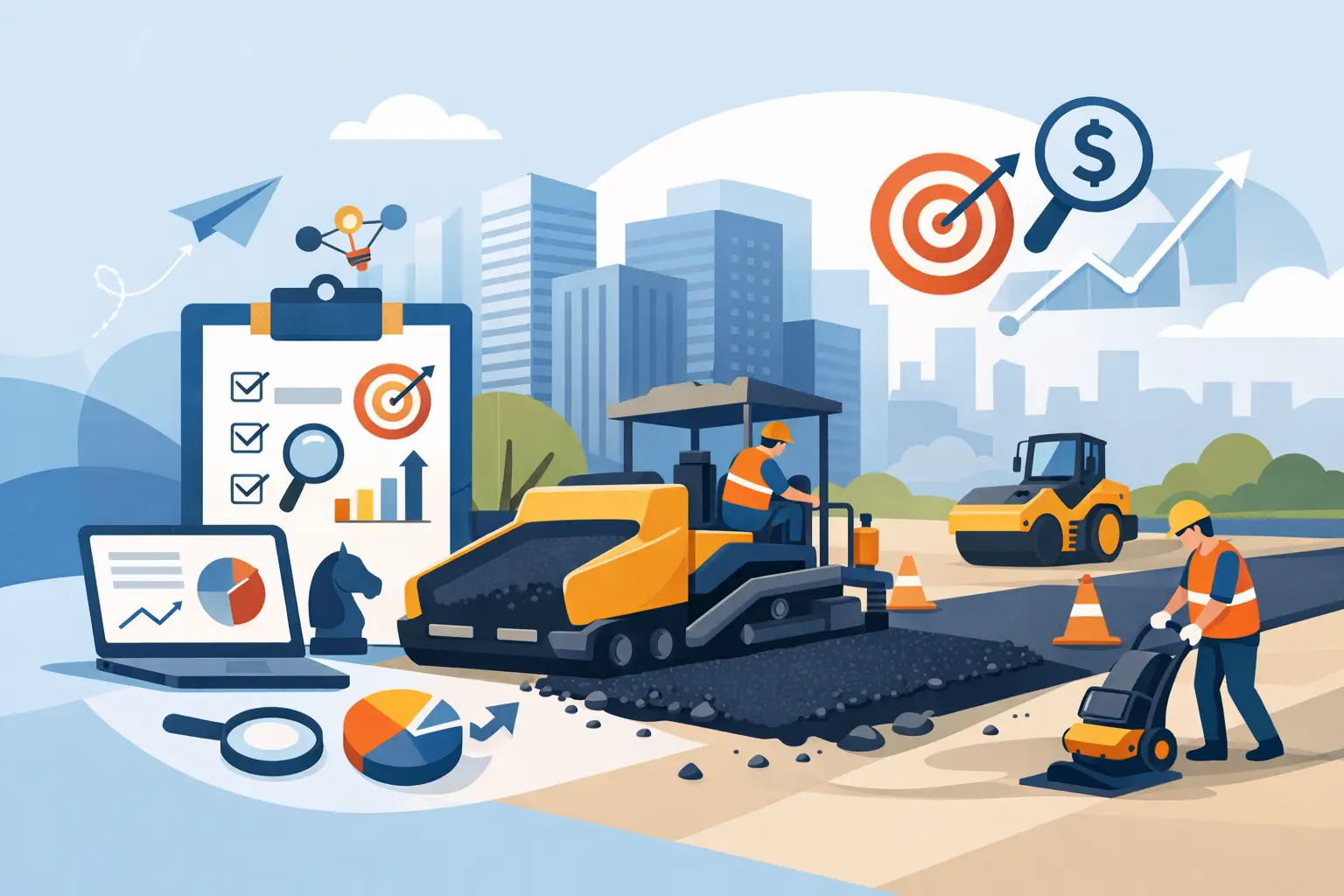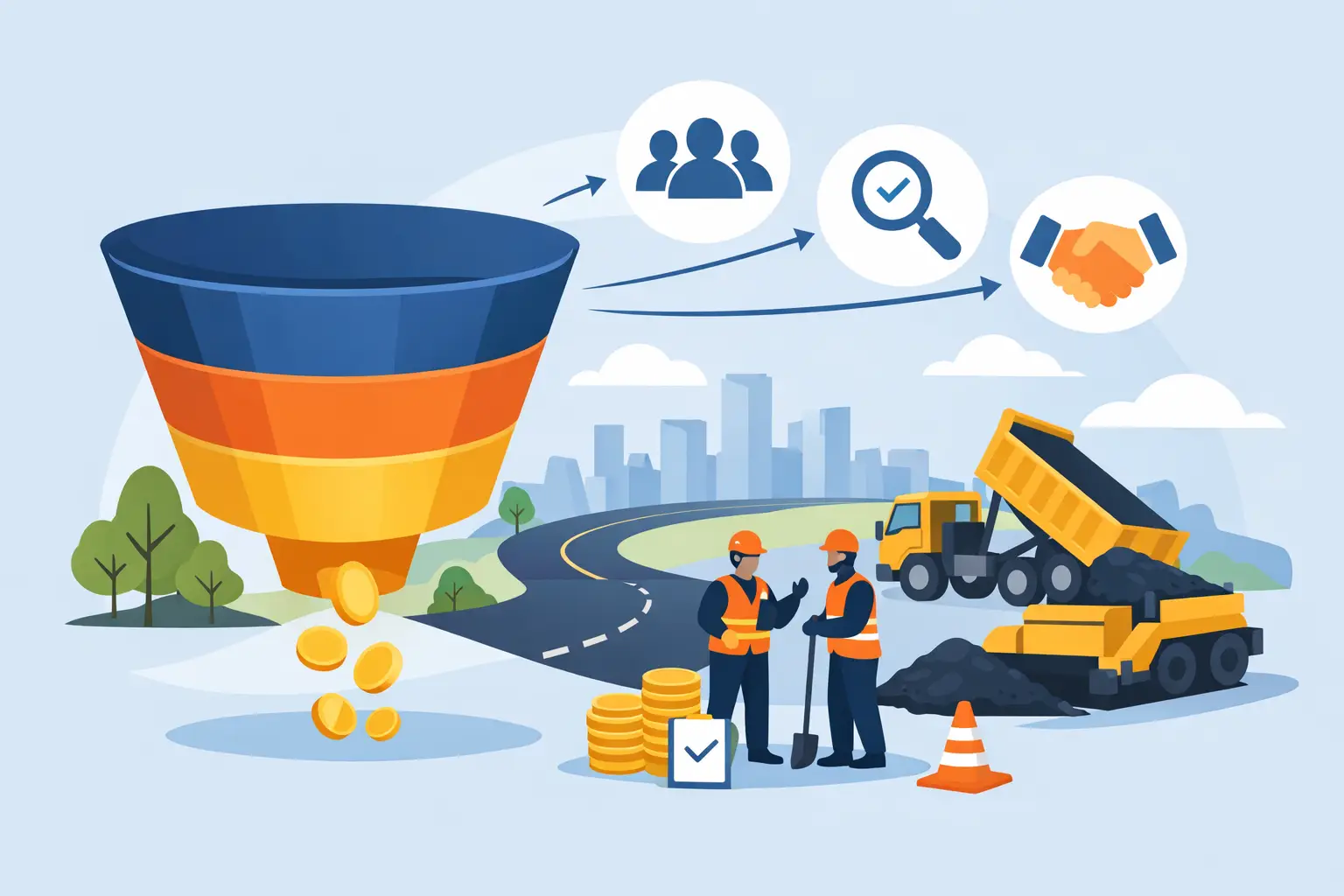
Most paving contractors do not have a lead problem. They have a conversion problem. The phrase embudo ventas contratistas asfalto matters because too many contractors spend money getting attention, then lose deals in the gap between inquiry and signed proposal. That gap is where schedules stay half-full, crews sit, and price shoppers take over.
If you run an asphalt company, you do not need more random form fills. You need a system that takes the right prospect from first click to booked estimate to closed commercial job. That is what a real sales funnel does. It filters junk, speeds up follow-up, and gives your sales process structure instead of chaos.
What an embudo de ventas para contratistas de asfalto actually does
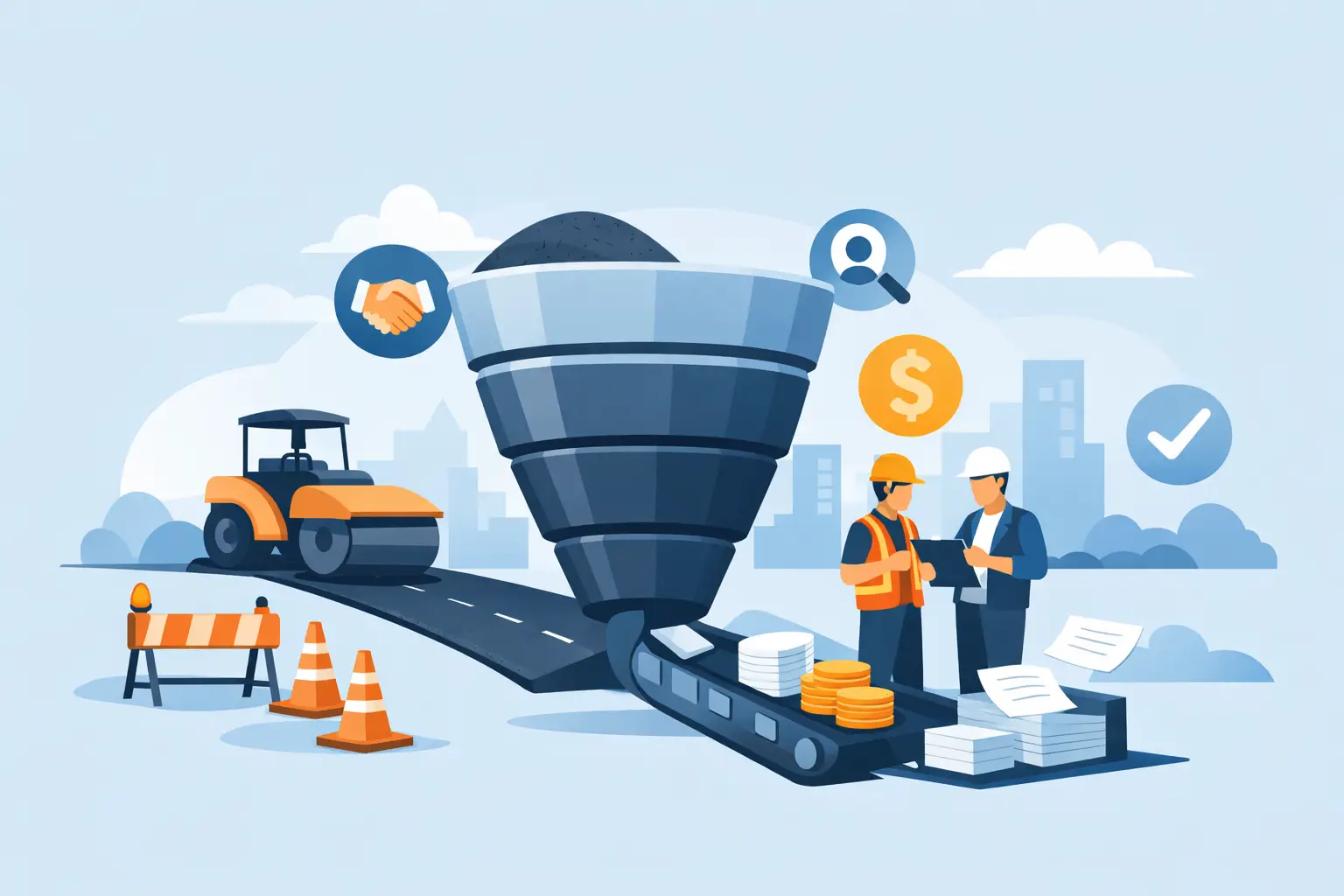
A sales funnel for asphalt contractors is not some fancy marketing buzzword. It is the path a buyer takes before they hire you. For commercial paving, that buyer is usually a property manager, facility manager, HOA board member, or business owner. They have a problem, they look for a contractor, they compare options, and they move forward with whoever looks credible, responsive, and easy to work with.
Most contractors break that process in the middle. They run ads or get referrals, but their response time is slow, their intake is weak, and their follow-up is inconsistent. Then they blame lead quality. Sometimes the lead quality is bad. A lot of times, the system is worse.
A strong funnel fixes that by doing three things at once. It attracts the right opportunities, qualifies them fast, and keeps follow-up moving until the job is either won or clearly dead. That sounds simple. It is. But simple does not mean easy if your office is buried and your estimator is chasing five other things.
The 5 stages of an embudo ventas contratistas asfalto
1. Attention from the right market
If you want commercial asphalt work, stop marketing like a residential handyman. Broad, generic advertising pulls in the wrong people. You need messaging aimed at commercial decision-makers with actual scope and budget.
That means your offer should speak directly to pavement replacement, sealcoating, striping, ADA upgrades, drainage issues, and maintenance planning. It should also speak to outcomes buyers care about – safety, curb appeal, liability reduction, tenant satisfaction, and budget control. If your marketing just says, “We do great asphalt work,” you are already blending in.
2. Lead capture without friction
Once someone clicks, calls, or lands on your page, the next step has to be obvious. Too many contractor websites make prospects work too hard. Confusing navigation, weak forms, and no clear next step kill momentum.
The best funnel moves people into a quote request, site assessment, or booked call fast. Not every prospect wants the same path. Some will call immediately. Others want to submit project details first. Your system needs to catch both.
This is where trade-offs show up. A very short form gets more submissions, but it also brings more junk. A detailed form improves lead quality, but lowers total volume. The right answer depends on your capacity and market. If your estimators are stretched thin, tighter qualification usually wins.
3. Qualification before your team wastes time
Not every lead deserves a site visit. That is the hard truth. If the project is too small, out of area, not commercial, or purely price-shopping, your team should know that quickly.
Qualification is where most contractors leak profit. They send estimators to dead-end appointments, burn fuel, waste labor hours, and clog the calendar with people who were never serious buyers. A proper funnel asks the right questions early: property type, project scope, timeline, location, budget range, and decision-maker status.
That does not mean being rude or rigid. It means protecting your time. The goal is not to reject leads for fun. The goal is to make sure the right opportunities get fast attention while low-fit inquiries do not drag down your sales process.
4. Follow-up that does not rely on memory
This is where deals are won. Period.
Commercial buyers are busy. They get distracted. Board approvals take time. Internal conversations stall. If your entire follow-up system is one missed call and a voicemail, you are handing jobs to competitors.
A real funnel uses automation and discipline. That can include instant text acknowledgment, email confirmation, reminders before appointments, proposal follow-up, and reactivation messages when a buyer goes quiet. The point is not to spam people. The point is to stay present without forcing your office manager to remember every lead manually.
This matters even more in asphalt because timing shifts. A buyer may ask for paving in 30 days, then disappear until funding clears. Without structured follow-up, that opportunity dies on your side before it dies on theirs.
5. Closing with speed and clarity
By the time a commercial lead is ready for a proposal, your funnel should have already done a lot of heavy lifting. They should know who you are, what you specialize in, and what happens next.
Closing improves when the process feels controlled. Fast estimate scheduling, clear scopes, professional proposals, and consistent post-proposal follow-up all raise conversion rates. If your proposal is vague, delayed, or hard to understand, buyers hesitate. And hesitation is expensive.
Why most asphalt contractors have a broken funnel
The usual pattern is ugly but predictable. A contractor gets some leads from Google, referrals, or paid ads. Calls come in at random. Forms go to an email inbox nobody checks fast enough. The office tries to keep up. Estimators follow up when they can. Some bids go out late. Some prospects never hear back. Then the owner says marketing does not work.
Marketing is only one piece. Without a funnel, more lead volume just creates more mess.
That is why aggressive growth-focused contractors stop thinking in terms of isolated tactics. They stop asking, “Should I run ads?” and start asking, “What happens from click to close?” That question changes everything because it forces accountability at every stage.
What high-performing funnels look like in the real world
A strong asphalt sales funnel is built for speed, filtering, and consistency. It gets leads into one place, routes them properly, and keeps communication moving. It also gives management visibility into what is happening.
You should know how many leads came in this week, how many were qualified, how many appointments were booked, how many proposals went out, and how many deals closed. If you do not know those numbers, your sales process is running on guesswork.
The best operators also understand seasonality. In peak months, the funnel needs to handle volume without slowing response time. In slower periods, it should support reactivation, nurturing, and outbound pressure so crews do not sit idle. A funnel is not just a lead catcher. It is a control system for revenue.
Where automation helps and where it does not
Automation is powerful, but only when applied to the right parts of the process. Immediate responses, reminders, lead routing, and long-tail follow-up are ideal. Those tasks are repetitive and easy to standardize.
But automation will not fix weak messaging, bad targeting, or sloppy estimating. It also will not replace human judgment on project fit, pricing strategy, or relationship-building with serious commercial buyers. If the front end is attracting the wrong people, automating the mess just means you fail faster.
That is why the funnel has to be built from the market backward. Start with who you want more of. Then shape the message, intake, qualification, and follow-up around that buyer.
The business case for building the funnel now
If you are relying on referrals, you do not control your pipeline. If you are competing on price, you do not control your margins. If your follow-up is inconsistent, you do not control your close rate.
A real embudo de ventas para contratistas de asfalto gives you control. Not perfect certainty. Not magic. But control over lead flow, response speed, qualification, and sales follow-through. That is how you stop swinging between overloaded months and empty calendars.
For contractors who want commercial jobs, this is not optional anymore. Buyers expect fast communication. Competitors are getting sharper. The companies that win are not always the cheapest or even the biggest. They are the ones with a process that makes it easy to buy.
That is why specialized systems matter. Companies like PaveLeads focus on this exact gap – building the demand generation, qualification, booking, and follow-up engine that most paving businesses never build on their own. Because when the system is right, the sales team performs better, the schedule fills faster, and revenue gets a lot more predictable.
The next big job usually does not go to the contractor who wants it most. It goes to the contractor whose process makes the buyer feel confident saying yes.